


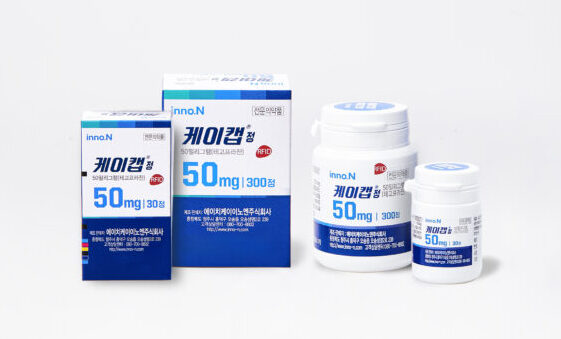
HK inno.N announced on the 10th that a recent comparative analysis has confirmed the safety and efficacy of its gastroesophageal reflux disease (GERD) drug 'K-CAB (tegoprazan)' against conventional proton pump inhibitors (PPIs) in cardiovascular patients.
The study, conducted by Professors Kim Yong-chul and Lee Oh-hyun of Yongin Severance Hospital, Yonsei University College of Medicine, focused on patients with acute myocardial infarction (AMI) who underwent percutaneous coronary intervention (PCI) and were subsequently treated with dual antiplatelet therapy (DAPT). While PCI is performed to widen blocked arteries in patients with heart attack or angina, DAPT is prescribed afterward to reduce ischemic events but is known to increase the risk of gastrointestinal bleeding. Traditionally, PPIs have been used to prevent such bleeding, but concerns have persisted over potential drug–drug interactions with antiplatelet agents.
The research team highlighted the potential of K-CAB, a potassium-competitive acid blocker (P-CAB), which is characterized by rapid onset of action, long duration, and lower risk of drug interactions, as an alternative to PPIs.
Using nationwide big data from the Health Insurance Review and Assessment Service (HIRA), the researchers analyzed outcomes in Korean AMI patients who had undergone PCI and were treated with DAPT plus either a PPI (19,201 patients) or K-CAB (2,075 patients). After adjusting for baseline characteristics, the study evaluated the risk of gastrointestinal bleeding and major adverse cardiac and cerebrovascular events (MACCE) — including heart attack and stroke — within one year.
Results showed that the K-CAB group had about a 28% lower risk of gastrointestinal bleeding compared with the PPI group, while the risk of MACCE did not increase.
Professor Kim Yong-chul, who led the study, said, “For East Asian myocardial infarction patients receiving dual antiplatelet therapy, K-CAB can serve as an effective and safe gastroprotective alternative to PPIs.”
Professor Lee Oh-hyun added, “As we enter a super-aged society, cardiovascular disease cases and related mortality are rising. Managing gastrointestinal bleeding during dual antiplatelet therapy after PCI is crucial, and this study demonstrates that K-CAB can be a safe and effective option.”