


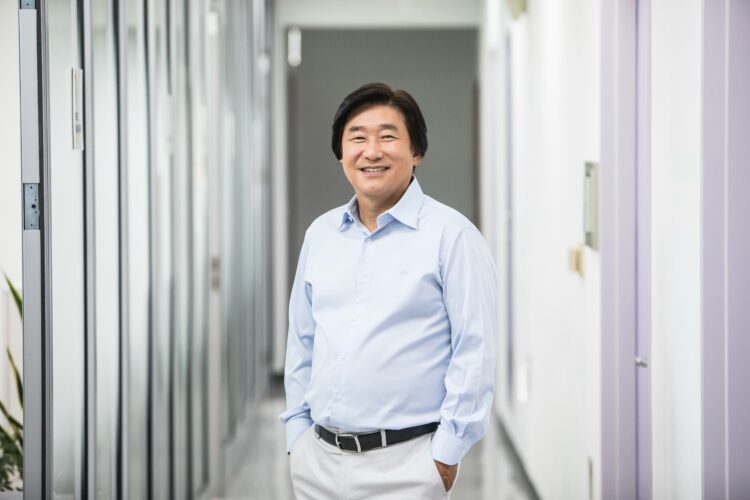
ABL Bio, which recently secured a major technology licensing deal and equity investment from global pharma giant Eli Lilly, announced that its next strategic move will be entering the fast-growing obesity drug market. As the global obesity therapeutics market is projected to reach USD 150 billion (KRW 218 trillion) by 2035, industry attention is now focused on how ABL Bio will position itself in this booming sector.
During a press briefing held on the 17th at the Four Seasons Hotel in Gwanghwamun, Seoul, CEO Lee Sang-hoon said, “Based on our previous deals with Sanofi, GSK, and Eli Lilly, you can reasonably anticipate our next partnership. Through the Lilly contract, we expect our indications to expand into areas such as muscle disease and obesity.”
ABL Bio has been accelerating global partnerships since 2022, leveraging its BBB shuttle platform ‘Grabody-B’, designed to enable therapeutic antibodies to cross the blood-brain barrier (BBB).
In 2022, the company signed a KRW 1.52 trillion (USD 1.05 billion) co-development and licensing deal with Sanofi for ABL301, a bispecific antibody equipped with the Grabody-B mechanism. ABL301 is reportedly progressing through Phase 2 clinical trials. Grabody-B works by targeting the IGF1R (Insulin-like Growth Factor 1 Receptor) to allow drugs—normally unable to cross the BBB—to effectively penetrate the barrier and reach the brain.
In April this year, ABL Bio signed another major deal with GSK, valued at KRW 4.11 trillion (USD 2.83 billion), to develop neurodegenerative disease treatments using the same platform.
Most recently, on November 12, the company entered into a KRW 3.8 trillion (USD 2.62 billion) technology licensing and joint R&D agreement with Eli Lilly for its broader Grabody platform.
Adding to this, Eli Lilly also committed to a KRW 22 billion (USD 15 million) equity investment—marking the first time a global pharmaceutical company has acquired equity in a Korean biotech firm.
A key point highlighted during the announcement was the potential extension of this latest partnership into the global obesity drug market, currently valued at roughly USD 30 billion (KRW 43 trillion). Morgan Stanley forecasts this market will expand to USD 150 billion (KRW 218 trillion) by 2035. While projections vary by institution, analysts broadly agree that the obesity drug market is poised for explosive growth.
Eli Lilly dominates the sector with its blockbuster obesity drug Mounjaro, which, along with Novo Nordisk’s Wegovy, effectively divides the global market between the two companies. With the market expected to grow even further, competition among big pharma for next-generation pipeline opportunities is intensifying—making ABL Bio’s platform capabilities increasingly valuable.
“Expanding indications is extremely important,” Lee said. “Our mission is to broaden our indications beyond CNS diseases into additional therapeutic areas.”
CEO Lee also pointed to ABL Bio’s bispecific antibody-drug conjugates (ADCs) and its cholangiocarcinoma therapy ABL001 as future growth drivers. Bispecific ADCs are designed by attaching a cytotoxic payload to a bispecific antibody capable of recognizing two different antigens on the surface of cancer cells, enabling more precise targeting than conventional monoclonal ADCs that bind to only one antigen.
ABL Bio’s bispecific ADC pipeline includes ABL206 and ABL209. Lee noted, “We plan to submit IND applications for these candidates to the U.S. Food and Drug Administration (FDA) by the first quarter of next year.”
ABL001, developed by ABL Bio, is a bispecific antibody whose global rights are held by Compass Therapeutics in the United States. The company plans to seek FDA accelerated approval for ABL001 as a second-line treatment for cholangiocarcinoma.
Lee concluded, “Through equity investments from big pharma such as Lilly, continued platform enhancement, pipeline expansion, and additional large-scale licensing deals, ABL Bio will push forward into its future growth trajectory.”