


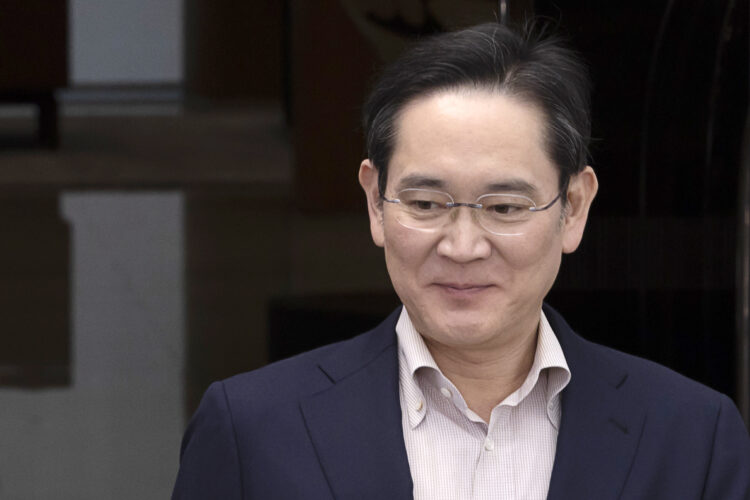
Samsung Electronics Chairman Jay Y. Lee has been cleared of all charges related to the controversial merger and accounting fraud allegations that have clouded his leadership for over a decade. With the legal uncertainty finally behind him, industry observers expect Samsung’s biotechnology business — a key growth driver for the group — to gain significant momentum.
On July 17, the Third Division of the Supreme Court of Korea (Presiding Justice Oh Seok-jun) upheld the lower court’s ruling acquitting Lee of violations of the Capital Markets Act and other charges. This final decision effectively ends the legal saga that began in February 2017, following the broader political scandal involving government influence and corporate favors.
Lee had been indicted in September 2020 for allegedly orchestrating the 2015 merger between Samsung C&T and Cheil Industries to secure succession of control, and for involvement in accounting irregularities at Samsung Biologics. However, both the district and appellate courts found him not guilty, and the Supreme Court has now confirmed this outcome — removing the last remaining legal obstacle for the Samsung chief.
With the ruling, expectations are rising that Samsung’s bio business will gain new momentum. In 2020, Lee had declared his vision to make biotechnology the group’s “second semiconductor” — signaling its strategic importance for future growth.
Since then, Samsung Biologics has expanded its biomanufacturing capacity from around 360,000 liters to 784,000 liters, establishing itself as a global contract development and manufacturing organization (CDMO) leader. Its client base has grown from just three companies in 2019 to include major global pharmaceutical firms such as GSK, Eli Lilly, AstraZeneca, and Moderna. Today, it counts 17 of the world’s top 20 pharmaceutical companies as clients.
Its subsidiary, Samsung Bioepis, has also solidified its presence in the U.S. and European biosimilar markets, with approvals for 11 biosimilar products globally. Currently, it markets 8 products in Europe, 6 in the U.S., and 11 in Korea.
The company’s financial performance reflects this rapid growth. Samsung Biologics’ consolidated revenue grew from KRW 1.165 trillion ($1.0 billion) in 2020 to over KRW 4.5 trillion ($3.2 billion) last year, surpassing KRW 3 trillion for the first time in 2022 — a record for a Korean biopharmaceutical firm. Operating profit soared from KRW 292.6 billion ($225 million) in 2020 to KRW 1.32 trillion ($1 billion) in 2023 — more than a fourfold increase.
However, while the company has ramped up production capacity and order intake, large-scale global investments — such as mergers and acquisitions — have remained limited. With the latest legal uncertainty now resolved, analysts expect Samsung to pursue bolder investments and long-term strategies in the bio sector.
Particularly, Samsung Biologics is planning a corporate spin-off that will separate its CDMO business from its biosimilar operations, potentially unlocking new synergies across the group’s bio platform. The newly formed entity, tentatively named Samsung Epys Holdings, will reportedly focus on platform development, subsidiary launches, and strategic investments — with potential M&A activity on the horizon.
The Supreme Court’s ruling also removes lingering doubts over Samsung Biologics’ accounting practices. In a statement, the company noted, “We have consistently taken measures to enhance accounting transparency, and we will continue strengthening our internal controls and oversight systems.”
A senior figure in Korea’s biopharma industry commented, “Samsung has consistently shown its commitment to nurturing its biotech businesses at the group level. With this ruling, the company is expected to take more proactive steps, and the industry welcomes the decision as a positive signal.”