


LigaChemBio has announced its plan to build a pipeline of 20 antibody-drug conjugate (ADC) assets by 2027. The company intends to accelerate global commercialization by expanding clinical-stage programs while actively pursuing technology transfer through package deals.
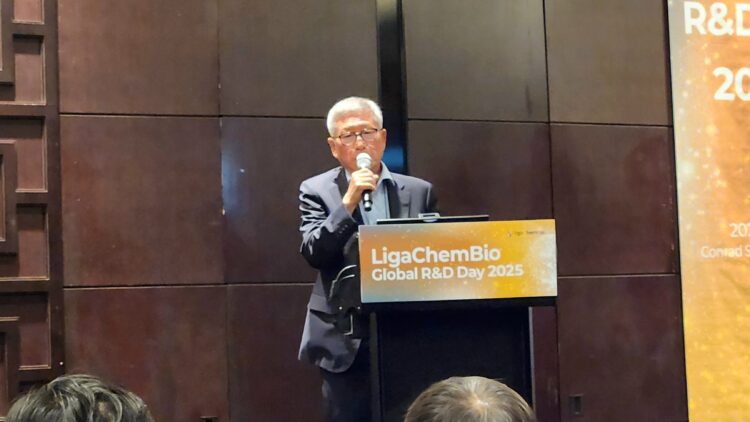
On July 1, the company held its “LigaChemBio Global R&D Day 2025” at the Conrad Hotel in Yeouido, Seoul, unveiling its research and development (R&D) status and mid-term business strategies.
In his opening remarks, CEO Kim Yongzu stated, “We are planning a pipeline of 20 assets, not only including traditional monoclonal antibody-based ADCs, but also bispecific ADCs (BsADCs) and dual payload ADCs.”
Kim added, “We currently have five projects in clinical development, and we expect over 15 more to enter clinical trials by 2027. Many of these will be commercialized through licensing-out strategies.”
Vice President of Business Strategy Chae JeiWook noted, “Like all drugs, existing approved ADCs still face challenges such as limited efficacy, toxicity, or resistance. By applying LigaChemBio’s platform to these ADC antibodies, we can develop next-generation bio-betters.”
He explained that the company refers to this approach as the “Bio-Best ADC strategy,” adding, “This strategy enables rapid progress from clinical trial planning to approval and has high blockbuster potential. We are already in discussions with several global pharmaceutical companies, and we also have internal pipelines aligned with this model.”
LigaChemBio also plans to expand its global licensing footprint through a “Big Alliance Package Deal” strategy, which bundles multiple assets and platforms. “We are working on multi-asset technology transfer deals that combine preclinical, clinical, and research-stage assets with our ADC platforms,” said Chae. “Our goal is to close large-scale licensing deals several times the size of our previous ones.”
President Park Sejin commented, “Last year, we invested KRW 150 billion (approx. $108 million) in R&D, and with more programs entering preclinical and clinical stages this year, we expect to invest around KRW 250 billion (approx. $180 million). However, future tech transfer proceeds are projected to be much larger, so there is no concern about funding capacity.”
Park also addressed the company’s relationship with Orion. “Some have expressed concern that LigaChemBio’s autonomy might be compromised under Orion’s governance, but our independent performance has ensured complete autonomy,” he said. “Our goal is for LigaChemBio’s market capitalization to surpass that of Orion’s, as a way of returning the favor.”