


The U.S. Patent Trial and Appeal Board (PTAB) has instituted a post-grant review of a key Halozyme patent, following Merck’s petition challenging its validity. The move casts doubt on the enforceability of Halozyme’s intellectual property and is expected to pave the way for the October launch of Merck’s subcutaneous formulation of Keytruda (Keytruda SC), which uses South Korea’s Alteogen’s hyaluronidase technology.
Since November, Merck has challenged approximately 12 patents owned by Halozyme, arguing that the company’s hyaluronidase platform may interfere with Merck’s use of Alteogen’s similar enzyme in Keytruda SC. In April, Halozyme countered by suing Merck in federal court in New Jersey, claiming patent infringement.
This is the first of Merck’s 12 challenges to proceed to post-grant review. In its petition, Merck argued that Halozyme’s claims related to a modified PH20 polypeptide lacked novelty and failed to meet disclosure requirements under U.S. patent law. The PTAB found that the claims were likely unpatentable under Sections 112(a) and 112(b), citing lack of sufficient structural and mechanistic detail.
PTAB wrote in its decision: “Based on the petition and supporting evidence, we are persuaded that it is more likely than not that the claims are unpatentable.” A final decision is expected within 12 months.
The initiation of PTAB review also means that the ongoing patent infringement lawsuit is likely to be stayed. Launching a product while infringement litigation is pending can expose a company to potential injunctions or damages, making the review a critical milestone.
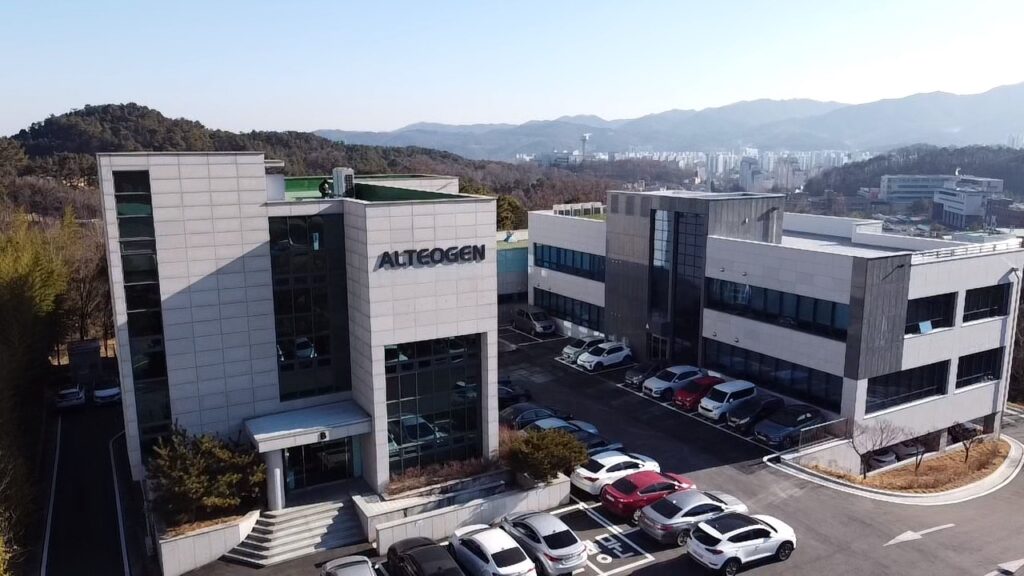
For Alteogen, this development marks a significant step forward. The company’s hyaluronidase platform, known as Hybrozyme, is embedded in Keytruda SC. If the product launches as scheduled in October, Alteogen could receive up to 1.5 trillion won (approx. $1.1 billion) in milestone payments, along with royalties estimated at 4–5%.
Suna Kim, an analyst at Hana Securities, said: “In 2024, 70% of U.S. post-grant reviews that proceeded to trial resulted in complete patent invalidation. Given the strength of the Section 112 arguments in this case, Halozyme is unlikely to prevail.”
Minyong Um of Shinhan Investment added: “With the PTAB decision now in motion, the October launch of Keytruda SC appears secured, and Alteogen’s milestone and royalty revenues are just a matter of time.”
In a statement, Alteogen said: “This proceeding highlights the independence and legitimacy of our proprietary platform, which is structurally and mechanistically distinct from existing technologies. Development and commercialization by our partner are progressing as planned.”