


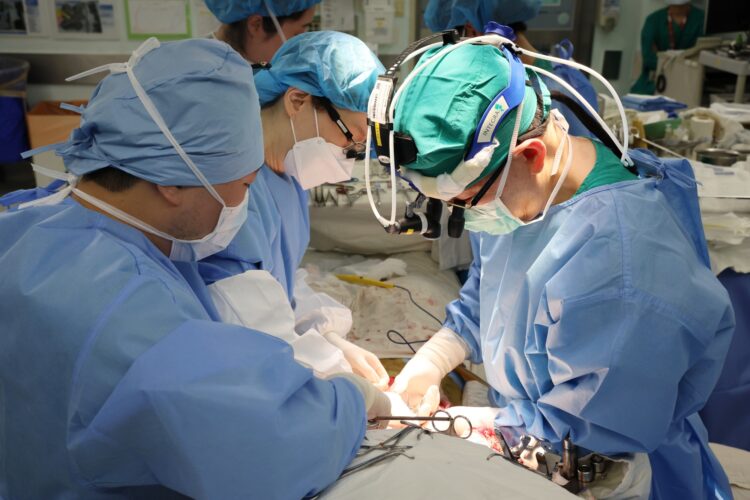
Seoul Asan Medical Center has reached a historic milestone, becoming the first medical institution in the world to perform 9000 liver transplants. This total includes 7502 living-donor transplants and 1498 deceased-donor transplants.
On the 30th of last month, four operating rooms at Seoul Asan Medical Center were in use simultaneously. Two living-donor liver transplants—where a portion of a living donor’s liver is transplanted into a patient—were carried out at the same time. After over 11 hours of complex surgeries, a patient in their 40s suffering from liver cancer and cirrhosis, and a patient in their 70s at risk due to alcoholic cirrhosis, both successfully received liver transplants from their respective nephews. These procedures marked the 8999th and 9000th liver transplants performed at Seoul Asan Medical Center.
The hospital stated, “It is rare even globally for a single medical institution to perform multiple living-donor liver transplants simultaneously,” and added, “This achievement was possible because each medical professional has the expertise to independently perform these surgeries, and our surgical system is meticulously managed to support this level of precision”
Seoul Asan Medical Center began performing deceased-donor liver transplants in August 1992, reaching this milestone over 32 years and 8 months. Remarkably, just two and a half years after reaching 8000 liver transplants in September 2022, the hospital completed another 1000, rewriting the history of liver transplantation worldwide.
The survival rates following liver transplants at Seoul Asan Medical Center are 98% at one year, 90% at three years, and 89% at ten years—among the highest in the world. These outcomes exceed the average one-year survival rate of 92% at renowned institutions such as the University of Pittsburgh Medical Center and the University of California, San Francisco Medical Center.
Professor Lee Seong-Gyu of the Liver Transplantation and Hepatobiliary Surgery Department at Seoul Asan Medical Center stated, “The driving force behind achieving 9000 liver transplants has been the patients themselves” He added, “This achievement was made possible not only by the leading surgeons but also through the collaborative efforts of our many medical teams, including departments such as anesthesiology and pain medicine, radiology, gastroenterology, infectious diseases, pediatric surgery, pediatrics, the operating rooms, intensive care units, inpatient wards, and the organ transplant center. Together, as one team, they have dedicated immense effort to ensuring long-term survival and improved quality of life for our patients”